REVEAL
STORIES
Under Alfredo Stroessner’s authoritarian rule in Paraguay, the Catholic Church underwent a dramatic shift from collaborator to critic. Influenced by the Second Vatican Council and the Medellín Conference, bishops began reframing the regime’s violent repression of indigenous peoples as a human rights crisis.
In response to Hungary’s growing authoritarianism and repression of public education, the Tanítanék teachers’ movement launched a bold wave of civil disobedience beginning in 2022. After several teachers were fired for striking, tens of thousands of educators, parents, and students mobilized across Budapest to reframe the crackdown not as a labor dispute but as a fight for democracy itself.
Following a deadly ICE raid in Ventura County, California where a farmworker died while fleeing immigration agents, farm laborers and advocates launched a three-day nationwide strike to protest the Trump administration’s escalating immigration enforcement.
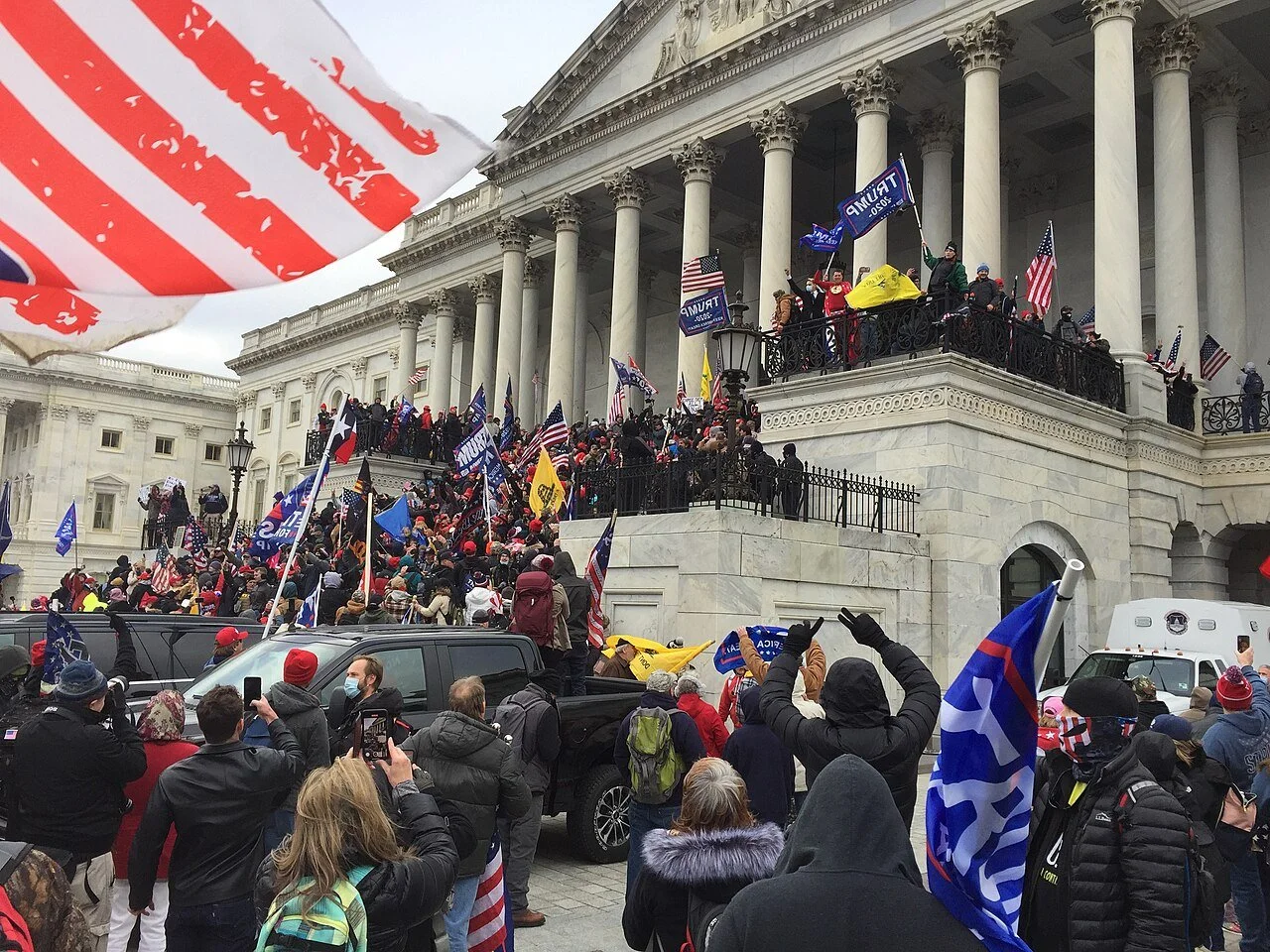
In the immediate aftermath of the January 6, 2021 insurrection, religious leaders across the United States moved swiftly to reframe the events as not just political unrest, but a moral and democratic crisis. Leaders from numerous faith traditions condemned the violent attack on the Capitol, denouncing it as a betrayal of American democracy and a perversion of religious values.
A bipartisan group of Wisconsin business leaders formed the Wisconsin Business Leaders for Democracy to counter misinformation and protect the integrity of elections following attacks on the 2020 results. Through civic engagement efforts like voter education toolkits, paid time off for voting, and letters of support for election officials, the group worked to redeem public trust in election workers and reframe partisan narratives that undermined democracy.
Pensioners, who survive on incomes far below the poverty line, are one (of many) groups suffering as a result of the government’s economic plans. After the government repeatedly refused to accommodate their requests for updated pension plans and access to essential medications, retirees began protesting weekly outside of the congress. They have been met with extreme force from the police and mass detentions without basis.
After Serbian dictator Slobodan Milosevic held power for nearly a decade, a group of students formed the movement Otpor! (“Resistance”) to drive him out of office using civil resistance. By 1998, Milosevic’s power was heavily entrenched which left the students little space to dissent within the system. Instead, they redirected their energy towards the tool they understood was most important for lowering fear and increasing participation from their fellow citizens: humor.
After vandalizing a historic Black church in 2020, the Proud Boys have lost rights to their name. A court awarded the Metropolitan AME Church control over the group's trademark and symbols, allowing the church to profit from any use of the Proud Boys' branding.
In 2014, after 27 years in power, Burkina Faso’s then president Blaise Compaoré sought to remove term limits so that he could remain in power indefinitely. While Compaoré had long functioned as a semi-authoritarian leader, removing term limits would have made a shift to democracy significantly more difficult. Sensing a unique (and fleeting) opportunity, the youth of Burkina Faso gathered together to lead a transformative protest movement which revealed the authoritarian nature of such a move and reframed a seemingly dire situation as an opportunity for the people to work together to make change by taking to the streets.
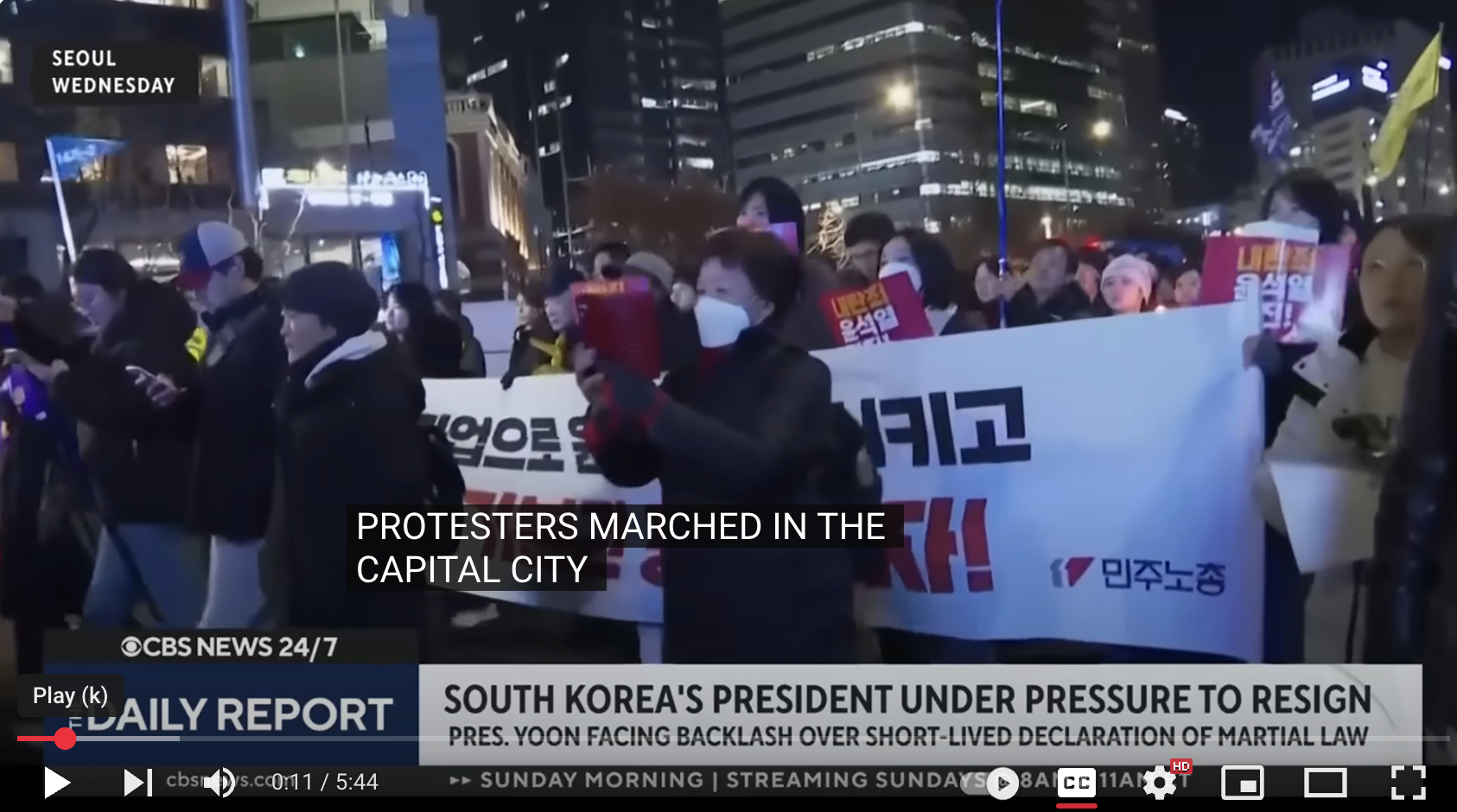
In a shock move in early December 2024, President Yoon Suk Yeol of South Korea declared martial law – banning all political activities, gatherings, and essentially any act of opposition to the government. While President Yoon’s authoritarian leanings were not secret, the abruptness of this development caught many South Koreans off guard. Nevertheless, they did not let the benefit of surprise undercut their opposition.
Sanctuary cities and faith-based spaces have a lengthy history in the United States, but they became a particularly contentious–and important–practice during President Trump’s first term. Donald Trump came into office on a wave of rhetoric demonizing undocumented immigrants and a commitment to increasing deportations. With the advance warning, a wide network of immigration activists, including many faith-based organizations, planned how they would meet the challenge.
On Just 1st, 2020, a few days after the murder of George Floyd, a crowd of nonviolent protesters were violently dispersed by a variety of law enforcement actors, clearing the way for then President Trump to pose for a photo-op in front of St. John's Church. The aggressive response, and the lack of warning to the protesters, was captured on live television and well documented via social media. As protestors and ordinary people sympathetic to their cause shared the videos across the internet, they brought widespread condemnation to the highly disproportionate acts and to the President for seemingly orchestrating them.
A week after taking office in 2017, then President Donald Trump issued the “Muslim Ban,” an executive order which immediately halted travel from seven predominantly muslim countries. As a result, people around the world were stranded in airports and legal residents of the US were being unlawfully detained by their government. The response was swift; a mass of people flooded to airports to show solidarity and reveal to the wider world the harmful and discriminatory nature of the act.
Whitefish, Montana, a town of about 8000 people, is known for its natural beauty and occasional celebrity sightings. In 2017, it received national news coverage when neo-Nazis were planning an armed march on Martin Luther King Day to promote white supremacy. A community group called “Love Lives Here” took a stand.
When residents of Enid, Oklahoma (population: less than 50,00) learned that the city had elected a person rumored to be a white nationalist to the city council, they organized. They formed the Enid Social Justice Committee (ESJC) and engaged in a campaign that shone a spotlight on the council member’s views and past actions. For months, through peaceful protest and sustained advocacy at city council meetings, their campaign garnered press attention for their revelations.
Far-right riots in the UK tried to spread fear and division, but organizers and communities fought back. Through counter-protests, rebuilding efforts, and mass mobilization, anti-racism organizers made it clear—hate will not go unchallenged. By the next wave of planned demonstrations, they had flipped the script: the far-right was outnumbered, and their violence exposed.
Ruby Freeman and Shay Moss faced relentless threats and racist disinformation for simply doing their jobs as election workers. But instead of backing down, they fought back—exposing lies, winning in court, and proving that truth still holds power. Their courage is now a beacon for election workers everywhere, showing that no amount of intimidation can erase democracy.
As Moms for Liberty pushes book bans and extremist school board takeovers, Grandparents for Truth is fighting back. By exposing political violence, reclaiming the language of family and freedom, and mobilizing communities, they’re shifting the conversation. The fight for truthful, inclusive education is far from over—but they’re making sure the next generation has a chance to learn without fear.
On March 7th, 1965, hundreds of people began to march peacefully in Selma, but the work leading up to that day began well before. For years, groups like the Southern Christian Leadership Conference and the Student Nonviolent Coordinating Committee had been holding lunch counter sit-ins and Freedom Rides to advocate for equal rights for Black Americans…
CLICK ARROWS BELOW TO SEE MORE